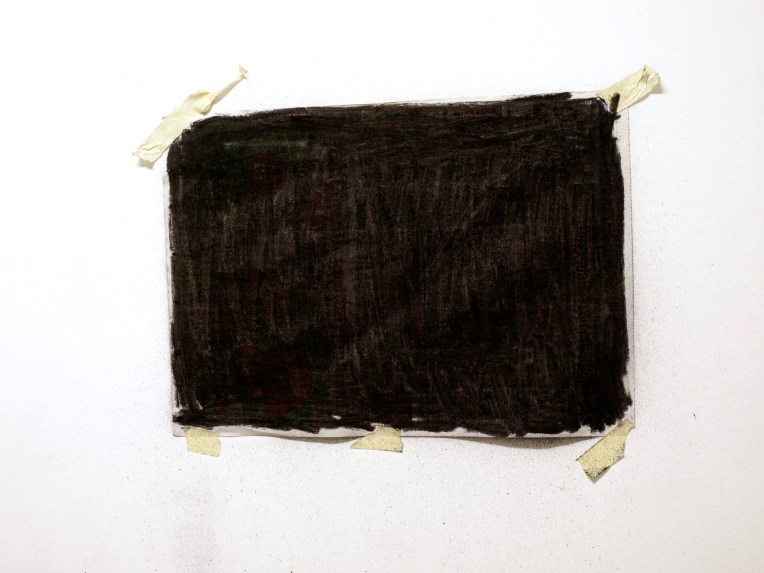
Radicalism is fiercely emotional and intellectual effort to comprehend life, or after having comprehended life radicalism happens, after enlightenment. Body and mind of profound understanding and making life, not taking it.

To get radical, my call for global revolution and Foucault’s puzzling request for abstention from getting globally radical are a clash of times and heads. (I would like to clash with Foucault.) Foucault’s philosophy comes from altogether different time that we live now, but it is intriguing to think through how radicalism should be executed, because I personally think it is something we must be and do. Radicalism is global already with help of internet and other devises which make spreading information and activism happen quickly and efficiently. To be radical does not mean physical and mental violence self-evidently. It means putting oneself in service of mankind. To give my all to a cause. It is a sacrifice and a gift and it is not a dead-end or suicide though it have felt like so. It is not to lose life but find it and find myself on that path. By sacrificing one part of me, I possibly find something new in return, a new me. Radicalism is a new beginning and it is living as full as one can in a wise and unwise way. To experiment is not always wise but it can be necessary. It does not mean there would not be mistakes.  There has to be errors, learning, giving up something and never giving up, pain and emotions one cannot endure.

Foucault writes in his text What is Enlightenment about dangers of radicalism. He writes: all projects that claim to be global and radical must be turned away from. Foucault Reader, Paul Rabinow, 1984. This strange sentence caught my eye and I understand it springs out from deeds of Hitler, Mao, Stalin, Cold War, atom bombs, the time after World War 2, Vietnam War, horrors in Kampuchea and Pol Pot et cetera et cetera. It is a terrible list of hellish terrors within short period in human history. I also come from images of that list. Those atrocities that happened are also history of mine as they are in my mind. Foucault continues thinking about concept of Humanism and usage of the idea in many contexts which have been as broad as Humanism is, vast, complicated and wide. National Socialists called themselves Humanists as well as Stalinists. Humanism is a set of themes and too diverse to be set to serve one ideology,to serve ideas of one belief system. But Humanism must not be rejected because it has been used to glorify needs to rule humans, to put them, us in a tight tether. Humanism, which sounds good, is good, embracing and smiling used by political and religious ideologies to make narrow perspective to humanity reigning social system is of course against the idea of Humanism. Idea of Humanism is an ideal, Humanism is for one philosophical and empathetic way to do good, pass good, put decent, good and desirable deeds and thoughts into the world. It is also a utopia of a perfect being and part of Humanism is evidently the ill people do which must nor should be denied nor forgotten personally nor generally. Therefore to say someone is a Humanist and mean only the good of it, taking only the good of being human, to hold human good on idea level like a possession is odd. To have Humanism as a concept in use for one’s own good is hypocritical, selfish and denying the facts of our nature. It has similarities with an idea of polishing the silver and gazing at one’s reflection on that bright surface.
ReificationQ Xhyperreality

Oh there is so much I don’t know. Tame landscape making all places alike.
Disposition
Infinitude and a day
speculations on eternity and nothing
a frozen girl at one corner of a busy street. There is never enough one can do.

My heart was as if someone was pounding the front door. I checked.
There was no one there but a bloody dog.

Since it is not a perfect world of man, we equal as people with our flaws, we fight because of them, because we do not tolerate imperfection and difference but seek similarity with weaknesses we have maybe ourselves and we learn to abuse weaknesses of others. Us in groups with flaws to match.

What are the human flaws we either tolerate or not? It is interesting because inadequacy is to what we pay attention and expect to face. It is strange the search of negative features which we go through daily, imperfections of ours and others. It is like we base our lives on mistakes, which we loath, which must not be there but they are and then what? Also worth seeing through is which characteristics are weak and which strong, what is strength. Is it something moving? Is it learned and emphasized, encouraged. To me it seems it is again a case of thinking you know and imagining, continuing tradition of division.

Is everywhere in the world middle of nowhere? Houses through which one can see. Softly humming hu hu.

against-oppression

cranberry on my receipt

Self-portrait, 2010

Yömaja/Shelter, bambukaihdin ja muste/bambu window shade, ink, 2006

installation against the wall

#immortalwisdompompom

28.12.2009-duuneja-0871

How much do we know we are ourselves (do I think I am) and what is a self in civilized society of order? And what is civilized society?

How does a person become herself/himself in a society of strict order and codes of living? To do things that are forbidden and hide, or to do what you like and not hide. Face consequences. Is it being yourself to be able to do what you wish? Aren’t I and self connected in doing and making. I become me when I am active, because making makes me progress as a person. In this sense it is horrifying to think that women are restricted from doing. Women are restricted from evolving globally. I am also product of my society where I am what I do. Those who do not work what are they? Why are we labelled? Such doing which does not directly make money is considered not as important. To be important is to label, to have a say, what is that?

There are examples of where women are under strict religious order (it looks to me the most of the world is under such order). Women are monitored, capsuled and punished if not doing as they are commanded to do. I do not speak of one particular religion, but it seems to be characteristics of many religions to have power over women. Women are under command whether it is faith or capitalism. Why is it women need to be under authority of man. It is hilarious to even have to ask. It is a joke, the authority of man and the desire for power.  It is a joke to want power for the sake of having power.

Female body is strictly regulated possession, it is conscious use of power. We monitor consciously and unconsciously bodies of people, daily and it is obsessive and never enough. It is desire. This is an everyday topic, topic of look and attraction. Why is appearance and monitoring placed so high in our social order are basic questions for Feminists (as it should be for anybody) and demand in Feminist movement for women to be able to be and do, be free from authorities of Patriarchy, free from the all seeing judging eye, which has to be pleased. What is the part of our individual consciousness in moulding us and what is society to mould us? Society clearly has demands on every person and it clearly wishes to have us certain way. 

Why does society demand anything if it is for us?

Our bodies are parts of organized society, parts of this constructed civilization. Media is filled with instructions of how to fit in, how to be best you can be in our given society. Curious is, is society moulding us or do we mould it by moulding ourselves or is it just interaction unable to be controlled? 

And what does rebellion got to do with moulding us and society we live in? What kind of forms of rebellion are allowed and how far rebellion is ready to go in terms of taking what belongs to people, how do people define themselves and their role as persons, how do they reflect themselves within the society they live and what are their lives suppose to be? What are lives suppose to be is a strange question altogether, but it is somehow obvious there are assumptions that stick like glue. Ways of doing.

CTRL

What exactly is being controlled firstly? Maybe enjoyment and lust. perhaps.

We like to prize the idea of freedom, but we hold together in captivity.

There is a deep wound and bone is showing. Bad shape of things, what do we make of it – make it even worse, still we do other than scream. Insides of people’s heads form noisy ache of hearts and souls and of other organs.
efforts to understand how mass of people function and form units, societies and structures. Pattern is a good word here, security pattern, safe havens, nests, restricted areas, with guns to protect. How do we form ourselves with others in doing and making. Do our collective movements function well, does our collective mind have mutual understanding, empathy to care how that other is doing. Does kindness make society work, is kindness our ruling force? It has to be. Emotions having leading part in sculpting society by the minute, by every person, by every act which is felt.

GIFTS. 

With their rare prizes and to whom should these odd chemical reactions be given. 100% of emotion.

A culture of almost complete restriction of feelings sounds unrealistic. It is difficult to imagine us without emotions. They are on our faces, movements, clothes, ways of walking. In there, in us, within whatever we do there are piles of feelings, layers of them, like vegetation, but there is an illness-like inability to give them like gifts, of wanting to express them to that person near like actually caring of that other.

What we should do is give emotions, share them and yes also restrict ourselves from giving them in a hateful way. Incapability of showing emotions especially negative ones make us ill in the end so negativity is important as well. Clever ways of showing emotions.. they end, begin and end. It is strange how lost people are with their emotions.