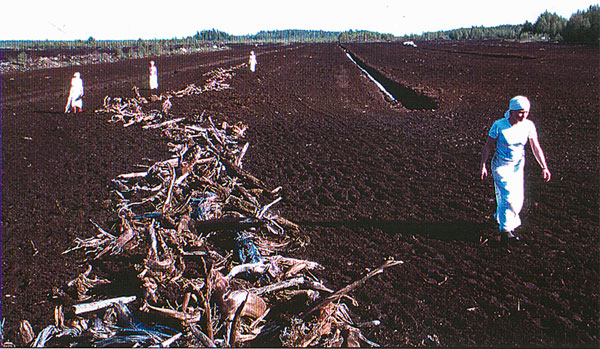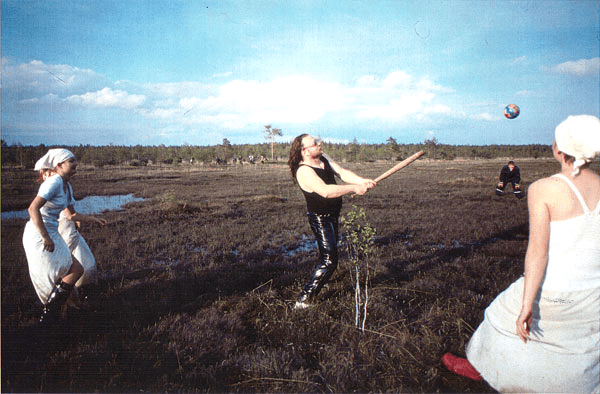
Suon estetiikka on edelleen ajankohtainen, se mitä ajattelemme suosta. Suo, joka kasvaa alle millimetrin vuodessa, on hidaskasvuisuudessaan kiinnostava ekosysteemi. Ajattelemme, että meillä on tätä runsautta niin paljon, että sen voi käyttää pois kuljeksimasta ja tavallaan hallita tätä kauheutta, joka luonto on totaalisesti. Vaikeakulkuisuudessaan ja upottavuudessaan sinne ei tee mieli mennä rämpimään, muuten kuin työn puolesta. Se vaikuttaa kaupunkilaiselle jättömaalta, jonka voi käyttää nykyihmisen mielen mukaan. Mikä on maapalan merkitys ihmiselle on myöskin ongelmallinen ajatus, jossa ajatellaan, että kaikella on oltava meille hyötyarvo, kaikki on meitä varten, koska osaamme ja voimme valjastaa olemassa olevia asioita omaan tarpeeseen, joka on loputon. Samaa logiikkaa käytetään monessa asiassa, jossa ajatellaan, että on olemassa joku, jolla on lähes loputon valta ja ne jotka kritisoivat kitisevät turhasta, koska eivät ymmärrä hyvän päälle eli hidastavat ja hankaloittavat putkiajattelijan elämäntehtävää ja -tarkoitusta.
Kun suo valjastetaan tuottavaksi, muutamassa vuodessa se on tasainen pelto, jossa ei kasva mitään todella pitkään aikaan. Mikä on soiden merkitys Suomelle nyt, kun voimme ajatella muita energian luontikeinoja? Mikä on sellaisen merkitys, joka on vaan jossain kaukana, mutta niin lähellä? On ajateltava, mikä on suojellun ja puhtaan luonnon merkitys meille tänään? Mikä on lähitulevaisuudessa kovinta valuuttaa? Tähän kysymykseen kun vastaa oikein, voittaa jättipotin. Se on varsin korvaamaton ja kasvaa itsekseen. Ihminen tarvitsee sitä kipeästi, kuten on tullut kovin selväksi. Miten voimme elää sen kanssa, tapahtuu kesyttämällä ja litistämällä, ajamalla yli. Tämä ei ole kovin harmoninen tapa.
Ilman luontoa me emme ole mitään ja meitä ei ole. Tämä asia kannattaa painaa hyvin syvälle kalloihin, koska kaikesta kieltämisestä ja vähättelystä huolimatta, olemme jo tulleet huomaamaan, että ilmastonmuutos, luonnon saastuminen, puhtaan veden saanti ovat elintärkeitä ihmisen ymmärtää ja osata ottaa huomioon. Ymmärtää näiden pieniltä ja vaatimattomilta vaikuttavien asioiden painavuus. Kun näihin osasiin tulee korjaamaton vika, olemme kusessa. Ne kettutytöt ja -pojat, puidenhalaajat ja huuhaatieteilijät, jotka ovat puhuneet luonnon ja eläinten puolesta, ovat varsin kipeällä tavalla olleet oikeassa. Mahtaa sattua riistokapitalistiin, fasistiin ja antifeministiin. Vähättelyllä ja suoraviivaisella ajattelulla tekee hallaa myös itselleen.
Kun ajattelemme lyhyellä aikajanalla tuloshakuisesti, kuten on ollut tapana ja on edelleen, on huomionarvoista muistaa, että niin ajattelee suurin osa ihmiskunnasta. Miten muutamme tätä koneelta vaikuttavaa tapaa tehdä ja ajatella, jossa oma etu on määräävä? Tarvitaan esimerkkejä jotka selvästi osoittavat, että toisin tekemällä voi pärjätä ja että on olemassa toisenlaista rikkautta kuin taloudellinen. Talous on se mittatikku, jolla kaikki mitataan, raha. Painotamme taloutta ja taloudellista kasvua juuri luonnon ja ihmisten kustannuksella. Luonnosta riistämme arvon, mikä siitä irti lähtee ja se tapahtuu tehokkaasti lyhyessä ajassa, jonka jälkeen siirrymme toiseen kohteeseen. Ajattelu on niin yksinkertaistettua, että on kummallista, ettei toiston haitallisuus aukene siellä missä sen pitäisi. Samaa taloudellisen hyödyn kautta ajattelua tehdään kaikkialla missä hyödynnetään eläimiä ja luontoa. Ne ovat täysin ihmisen otettavissa vailla muuta arvoa kuin se, mikä niillä on ihmiselle. Miten arvo ihmiselle mitataan, miten jonkun arvo havaitaan ja saadaan käyttöön? Mitä ihmisen on hyödynnettävä ja mikä on hyvä jättää hyödyntämättä?
Ihminen arvostaa eniten välitöntä hyvää oloa, joka on koukuttavaa. Pyrimme elämään hyvässä olossa, karttaen huonoa oloa. Olemme paljon mielitekojemme ja kuvitelmien vietävissä. Voittajia ovat ne, jotka kykenevät käyttämään systeemiä parhaiten omaksi hyödykseen. Tätä kiiltoa silmissä pidetään älynä ja oikeutena. Sillä perustellaan turkistarhaus, tehomaatalous, yritystuet ja tehokarjantuotanto. Onko otettava kaikki, mikä on otettavissa, vai voiko jotakin jättää ottamatta? Kaikki tehdään niin tehostetusti kuin on mahdollista puristaa kuivaksi. Puristaminen on hyvä sana tässä kohtaa, tiristäminen. Niin paljon kuin ihmisen voimilla irti lähtee ja sitä kutsutaan edistykseksi. Meidän olisi ajateltava hyödyn ajatus uudelleen. Mikä on tarpeellista ja kaikkia hyödyttävää perustavanlaatuisesti, ei antamalla välitöntä mielihyvää niinkuin sokeri, vaan pitkäkestoisesti pitää kylläisenä. Oikeutus kaikelle on edelleen raha ja oma etu. Edistystä olisi huomata tekojen vaikutukset pitemmällä aikavälillä ja ymmärtää tulla vähemmällä toimeen. Se olisi todellista edistystä.
Terveisiä KHO:lle
”Kaikki nämä kaunokaiset henkäilevät jalkojemme juuressa viimeistä syksyään. Pientä kaistaletta lukuunottamatta koko Kaitasuo muutetaan rahaksi.
Niin että oikein kylmiä terveisiä (etenkin kihokilta) Riitalle, Mikalle, Vesa-Pekalle,Tainalle, Jannelle, Ollille ja Tuirelle, näille Korkeimman hallinto-oikeuden veijareille, jotka 18. elokuuta varmaan toisen kampaviinerin jälkeen päättivät myöntää Viipurin Turve ja Multatehdas Oy:lle luvan turpeenottoon.
Kaitasuon lähes 10 000 vuoden taival päättyy kaivinkoneiden möyhennyksessä mustaksi maaksi, jossa ei kasva mitään pitkään, pitkään aikaan.
Beggars are an everyday sight in bigger cities. Feelings towards beggars are negative which I can understand as there is no pride left when you beg. You are on the street and are very vulnerable. Poverty is seen a fault of your own, not a virtue. It is a stench and a shame to not have money. Opinions range from disgust to pity. As an artist I can relate to this. A poor artist is a bad artist, which thought has as much sense as the art scene in general. But still I am rich. I look rich because I have my teeth left and my clothes are new and I have a home. I can relate as I do not come from money and I make art at shoestring budget. There is creativity in being poor and I can afford to think this way. Having no money makes you innovative. I do not consider wealth a measure of man and I do think we should start consuming less. To learn to think having less a virtue is what I’m hoping to see. Biggest wealth is what a nation can do to its citizens and help them think that there are options for them to try out, that they are not destined to be beggars or what someone else tells them to be. Our destiny is not set by other people and where we come from.
Merciful and allowing kindness, non judgmental attitudes towards beggars resonate with our overflowing concern over the third world countries. Their state is what we feel guilty for, it is our doing in part, but how long should this guilt go on? How responsible are Finns for example for what happens in the world now? Our consuming of goods and lifestyle is a constant threat which includes facts about slavery and child labor, how much do we contribute to and how well can we be aware of exploitation? To be able to get ahead in life is not luxury it is a human right, to evolve on your own. Not be the child to be abused but taken care of, our responsibility is grave and dark. Of course we must be concerned, but what kind of help is the best kind? Do we support corruption and oppressive traditions when we give monetary help? For those who are oppressed and poor begging must be allowed, but it cannot be a without an end kind of method of earning. How much mercy there is and what does it mean when you give money? Are you doing something good for that other person or for yourself, you save yourself and the other perhaps? In Finland there were not many if at all beggars on the streets ten years ago, living without a permanent home in the cold on the mercy of others is a short life to which in Scandinavia some party will intervene. To intervene to destructive ways of living is one aspect of welfare state. Abandonment can happen by families but not by state. The Roma people are tightly dependent on their family structures and hierarchy there which cannot be questioned as harmful. Beggars beg for reasons we can guess what goes behind there is a matter of knowing and suspicious, a well grounded question. Begging is especially cruel for children for which I am most concerned about. The most important duty of any nation is to provide a basic education for its children and get them out from the streets. This child labor, abuse and a human rights violation is very acute all over the world. Despite all the natural and other riches nations may have child poverty is on the rise and they are the ones who suffer most. I do not have any empathy for people who put their kids on the streets to work may the work be prostitution, begging, playing music, washing car windows etc. Child labor is one of our major problems still even though there is clear evidence that educating all children is the benefit of all society. To give education is the safest bet and an investment for the future. People who have been working on the street since childhood probably will continue to do so in adulthood.
Poverty is a though one to escape and to change destitute life is unbearably hard but not impossible. To think it is impossible is to think fight is only for survival and that options are for the rich. In Finland punks beg money for beer in the summer and I can laugh about it. The Roma people come here to beg throughout the year which gets very cold and is not a healthy way to make a living. When families with children occupy the streets at the centre of the city, the busy corners reflect ways of life and how distant people’s lives can be from each other as distant as understanding of life and its purpose are. One wonders is this really how the Roma want to live, shouldn’t their kids be at school, and there comes someone telling me they have no option. So I conclude they are refugees. Why do they not see themselves as refugees? To criticise their way of living is for them cruel and unjust because they escape from oppression, this a repetition and the story, but it is vital for their survival, is always the answer, the same unchangeable. What else could they do and it is easy for me to say what I think. You beg money from me I can have an opinion. They do not think and see other options for themselves and their kids as they are a different class as the Roma of Finland seem to think of themselves as well, a race, a tribe. They see it difficult to live as the majority of people do and mutual respect is scarce. The best help sometimes is the understanding of facts and rules, admit that the world changes around, but you do not. What are you going to do about it?
It’s true to my mind to give money for them is supporting oppression Roma themselves are guilty of, a culture that forces its members to live in a certain way. Handout is giving ground for begging. Begging is about serious destitution, a culture where humans live without tomorrow and as it is allowed to happen is as such difficult to approve of. People are free to beg and continue to beg but not change their predicament in any way, there is something wrong with that and I can say it. The Roma clearly do not think or do not find any other way to make a living. Destitution shrinks one’s thinking and views on oneself. Among the Roma there is a thought that their lifestyle is sacred and they involve religion to begging which there is no business others to intervene or judge, people must help those in desperate need if they are true Christians. Forcing is not a Christian thing to do as is not stealing, lying and being incapable of helping oneself. To force someone to beg is slavery. Those who do not contribute and show compassion are cold-hearted and cruel, the Roma say. Education, evolution and change demand a certain degree of cruelty and pain. Those who stubbornly want to stay the same blame other people for their situation. Such denial is common anywhere. Feminists are blamed for making men feel inadequate and destroying families. If you are so useless what is the use of you? What people should learn is to help themselves not depend on other people to make them happy and give money. That is the way to go. This idea of making a living doing what they have always been doing is very telling of how stuck people are in their old ways of living without education. People who are oppressed in their own countries can apply for asylum. Surely options seem few under oppression, but they are few partly because there is not a seed of hope or thought for anything else. Thinking destiny is set because of your sex, origin, colour, religion etc. is yesterday’s doctrine that must not be obeyed today by anyone.
Denmark already has a very strict law against begging which is seen as fascist by many. Beggars who go to jail may have a chance for change. To my mind tradition of begging which continues from generation to generation is fascist. It is forcing a whole of community under one truth and one kind of way of living where women and children must obey and do what they are told. The Roma people are oppressed and rejected and begging is not helping their case, nor is living in vans or stealing from shops. As shocked as I was when they entered Finland a couple of years ago, the shock may be due to me having enjoyed the welfare state and possibilities it has offered. To remind you state providing its citizens is the best way for poor people to get ahead in life, such as myself, I have never had money to call myself rich. I do not get used to the idea there are people who base their whole existence being beggars. Roma people who usually beg in Finland ground the whole of their identity via this act of asking for daily income from people who pass them by. Communities that stay the same are doomed. Resistance is the only way. It has been the way for the poor to change the world and themselves.
Appearance being so important to us, our minds revolve around how we look and what is thought of us, what is seen as us and how to that sight is reacted. Our appearance is self-expression which we must be very aware of and think what does our expression mean to the viewer. Image of self is to know how much is it a show and what is it meant to do. What can be done with that self we are, the body that is you, how do you feel about you, how do you use your whole self can have interesting conflict there with the inner self, culture we are born into and the rest of us what obviously affect all and those who observe. They all who are watching have a thing to say. It is one kind of totalitarianism to which we volunteer or not. To be able to choose is a luxury, to have freedom of expression. How one thinks of oneself, what is the factual you to be found, visible and how does one evolve, what is the pressure there and who is in command. What is the direction to take up and follow as we are advised to find the best us, the best you, what is that and when do we know ourselves? When nobody accepts you as you are, there is a problem and it is you. It is not the environment, it is what the environment thinks that counts, so change yourself or rebel. You will not find yourself by playing by the rules and expectations that are handed over to you, the conflict is constant and decision is yours up to a point. Somewhere you do not get to choose. This I believe has resulted a society that is afraid of conflict, afraid to disagree and afraid of not always looking one’s best. The best being agreeable and clean. That you there is silently sobbing or anonymously raging but feeling strongly nevertheless. Conflict is instant as our problems are nowadays huge, to solve the arguments we have that are unsolvable because no one is willing to back down.
How to deal with racism, sexism, fascism, fanaticism is to condemn and demonstrate against, but to really live by principles that are not sexist, fascist, racist and fanatic and are against those things may be more difficult than we realise as we do not recognise these things necessarily in our behaviour unless we have analysed and thought through what it is one is doing and thinking and if we do not experience the negative poisonous things ourselves. It is an every day concern how to present oneself, what is the right way, that as how the self is presented and read, what is the actual you, how does it come to be and what can and must be controlled. What is the pretence there, which part of you is to hide or change, what cannot be shown or changed but must be dealt with. What is here to deal with is what to take seriously and what not, what can be seen what is happening. To be hopeful, presentable and accepted, have a positive mental attitude and think about growth, growing. To grow is to add, to be more. How can we be more than what we are is to learn and understand what there is to learn. How to be more when anything extra you thought was growth is unachievable or taken away, extra being the wealth, possessions or the weight of you, your output, your purpose. Weight being fat, trauma, the garbage you wear and eat, say, do and think, the negative thinking, wrong way of living and working etc. The right kind of load to get rid off, we have lots of tutorials online. Often we ourselves do not accept our bodies as we are too close to it, live with it, in it, it with us. We observe ourselves constantly, but still the body is unfamiliar, hostile and strange. It is unfamiliar as an organism which changes constantly. We do not control it, but we do something to it, manipulate it, so it is not natural. Our bodies are under attack by germs, pollution, other people, expectations, food and drink and we are bombarded by experts who give us daily advise how to mould that piece of physique that is you to be something which is maybe the other and more suitable. So how to know you seems a mission impossible, again, but it is one main goal. The impossible there is the unbearable, the uncontrollable, which is especially our feelings. How to understand where feelings come from and what do they mean to our existence is essential and too much disregarded and underestimated still. Emotions are inferior even though they rule. To look like one is not falling apart but in control, one’s life is in order and in fashion. Holding oneself together is to keep composure and keep calm. There is style to it and there are rules. A one piece moving ahead having a life worth living.
For a lot of people life goes around how to look, presenting that as self and how to keep up with that appearance which is presented to us as better and new. Are we owners of self at all or manufactured? To preserve oneself as fresh and as new as possible, presentable, agreeable, then there are people who don’t give in to the culture of appearance, not giving it that much thought, because it is not the most acute problem in a world of problems or blending in is the safest place to be. If sticking out causes problems for you it is a 100% sticking out is unlikely to happen in full, for some hiding is impossible, then you are vulnerable. It is a problem of our world, the magnitude and endless trouble, policing neurotically, hurting and pointing out the difference which is seen a flaw, abnormal and to be cured. How does that other one look like, wrong or right, is he hostile or weaker and where does he or she stand? What is that look about, what is it telling you and why do you read appearances are questions we should think more closely because we think with our eyes not necessarily analytically, definitely not free of judgment. Why bulling for example based on appearance continues to be the most often and frequent issue for many, bullying manifesting as power as it is the easiest way to put someone down making remarks on appearance and what kind of neuroticism this event in human behaviour creates. It is what we see of a person first, the look of his or hers. What is there to do than look, to look better and not be pushed aside, look like something else, you changes when you change your wardrobe and what is good in doing so is the feel relieved. What is the best, what is the wanted, why it is not you and how to feel about that strange fact that we look like something, different is the personal but unwanted. To comprehend meaning of variety, difference, understand difficulty of having an out of norm quality, seeing ’obscurity’ and accept seems to be more difficult than expected to for people, to handle and grow not to pay attention, for grown-ups and for children it is almost equally hard. We grow into this culture where pointing out and looking at appearance is important.
Our appearance is the book that is read. It is about knowing. Something admirable must be in you and the personal come out if you dare. What it does for you, this open personal, in your life depends on what you show, how far can we go in showing or revealing ourselves, what is the limit there and what is obscenity. What do you get or don’t get because of what you look like and what you show. Usually it is about sex. Sex has a lot to do with how we look at people, how we look for people and what we look at, are interested in. Attractiveness is the thing, a thrill, to attract people is to entertain. Interesting is the original and the personal still do not obey rules of your own necessarily but the aesthetics of the culture, rules of somebody else, which of course must be the case for us to live in some kind of order. They say people find confidence via looks, they find work and partnership, fulfilment and belonging. People who have found their confidence after having lost the fat on them from the right places truly have felt miserable. There are right places on people and then there are wrong places. It is a competition, an obsession, a way to look at bodies and faces. I have been wondering how superficial is this need, an urge to fit in, that we are seekers for safety is to wear a mask. Visible and too visible can both be too much in finding a comfortable existence, but comfortable does not mean having a quest for growth and change. This search for a look is to make an impression and be accepted and it is about our freedom that is granted for us modern individuals, to be ourselves, find ourselves and what to do with the random stuff that disturbs is to get rid off it. That what is ugly cannot show. Conflicted by finding security, symmetry and risking it. How lost are we with our values that we think are what we are and are good. Do we look like what we are on the inside, in denial, inside out as we seem to think as confessional is the new authentic. The inside we like to hide but connect with those others who feel the same. What is private nowadays anyway. When people comment other people’s appearances out loud they are also getting naked by taking position of the oppressor. That is the moment when people reveal themselves without realising it fully, I think. They think they are powerful in this moment of judgment, that is the trap. The first judgment made on someone is immediate and it is about appearance. We make it obviously naturally and from superior place of entitlement. We measure the one coming up, value of that person. Those who look weird are thought to be weird as people. For men looking scrubby is allowed in totally different way than for women. For sexes looks mean different things. To notice the arrogance, violence and cruelty there is makes the world a violent place very near.
It is a strange feeling a movie being an organism that becomes part of you when you watch it and it remains with you afterwards. You are familiar with it but there is an element of unexplainable and the issue is of something that is not emptied. It is not just series of breathtaking images put on screen to take the viewer to another place. There are movies to entertain and bring instant pleasure, this is something else which is extremely difficult to point out without sounding an ecstatic fool stating the obvious, the brilliance and beauty there is, divine and timeless, but still rooted in time and place, to us. It is not extraordinary to hear male voice of critics, those who watch and love movies and so often disregard the feminine side there is clear and strong but somehow invisible for the male. To me it is loud as is the dogs barking in the fog and the sound of heels in a church where woman of the film is slowly walking like moving in a mystery and learning to know it. It also is not unusual to hear male directors say they did not realise how powerful the female protagonist really is for the female viewers. What is this woman doing she who walks like a queen into something ancient like a tourist, in to the old refusing to kneel down and pray and refusing to want the same which she should be wanting naturally. A surprise for her is how she is not able to perform the same rituals as those to whom it comes naturally, how out of touch she is. In the face of what kind of movies get made nowadays it is ironical to state harsh critique for Nostalghia. In many cases of movie critique subjectivity is speaking. Art is sensitive to the word of experts who give their final say and I have found the official standings on films often biased and unfair. Being judgmental towards something so delicate and precious is almost blasphemy as it is easy not to look. Is there same disinterest as there is disinterest and underestimation towards the feminine altogether I wonder. The public believes the experts. Experts know best. They have authority. To have faith in experts is one kind of religion we should learn to be more critical about. Pay attention the woman is driving and stops because she chooses to have a walk.
My attempt is to be as analytical as possible. What it is I am watching. As much as there is room for objective analysis in art and for Tarkovsky, there is emotion and devotion to his art and much of art analysis and critique have personal liking and opinions weighing in on the whole of what is being said about a piece of art and the artist. Nostalghia (1983) and Sacrifice (1986) are often said of being less good and artistically not as high in artistic quality, innovation and expression as Stalker (1979), Mirror (1975) and Andrej Rublev (1966) which all bring in front intensity of faith and religion in Russian culture and thinking, which was at Tarkovsky’s time an atheist country. Russia being an intensely macho country where worshipping the Mother of God hasn’t faded. The nurturing mother has important task and nurture especially which is part of the sacred. Highlighting the female for Tarkovsky functions as Ellen Ripley in the Alien movies. Her power is under serious doubt and seen as fragile, but she has it anyway and she uses her power to save the world.
Nostalghia struck me as it highlights the feminine, how faith is part of our bodies and what we see, how we look, the divine is in the feminine and there is the unbreakable link to nature, women’s desire to be mothers and have faith to the unknown, or not. To my mind the film is an exemplary exploration to how much one is master of one’s destiny and how the modern brings in and strengthens the conflict between nature and man, conflict between the sexes is a constant battle. For women to have a mind of their own is the modern and natural, they do their thing, the question is what is the thing of women, with women, what is theirs to have, for them. With the modern something happens to the collective, ideals and to the common good towards which to be nostalgic about is fair. Something happens to the individual in this process, the estrangement, loss and loneliness, an inner and outer conflict, a disaster. Question is what do we become? To be an organic part of nature bearing children, being a child and finding harmony there in simple things may be too simple there where there now is very little space for the harmonious and simple things. Choosing to be a traditional mother, a figure part of the sacred or a modern independent woman who has a say over her body and what she does, whether she believes or not, is liberty woman is not willing to back away from.
How much my admiration does justice to his art or does it cloud my judgment is probably a footnote. What is there on film that one senses, sees, feels, smells, hears, thinks, imagines via Andrey Tarkovsky’s movies as they are so packed but delicate, light, fragile and alive. Maybe that is it the moving part, essential aspect in his films how alive they are, how much emotion there is without frivolous nonsense as people in his films are sick of nonsense, sick of grandiose and sentimentality. There is sincere interest in human existence and how we experience, why feel the way we do and be trapped by feelings, how these personal experiences can be shown and be understood by others as the same. That is the true strength there, will to understand and look what is so felt, what is subjective and universal, the universal emotional to be understood which today is one difficulty we face as we are like images not revealing multiple dimensions on screen. How and why we can try to understand the other and be compassionate. Interesting is what makes a movie scene and an image sincere is the flaw, mess, ruin of ours. So much so that we believe in it and identify with it, absorb the view as if it was something to breath.
Fragility in a scene where a man holding a short white candle protecting its flame begins a task that seems irrelevant and pointless but is far-reaching. He has stepped inside an empty pool and begins to walk with a candle from one side to the other. Bottom of the pool is rocky, he takes careful steps. He touches the edge of the pool with his hand like it was a game as he begins and walks to the other edge trying to keep the flame burning. He fails a couple of times as the candle goes out, his frustration shows, he is seemingly tired and exhausted but he must hold on because he is determined and must keep the candle burning as he walks to the other side of the pool. He finally manages at his task gently holding the candle as it was his child, protecting it with his hand and coat as if he grew old while completing his task and died after having placed the candle on the edge of the pool and left it burning. It is an emotional scene, exhaustively beautiful, slow, painful for the viewer, grounded, vividly depicting a state of mind, an any man’s effort which is so packed and painful viewer feels the torture of failing and trying again and relief of succeeding finally as if it was a physical sports exercise. Close-up to the hands and the candle, heavy breathing.
I experienced Nostalghia as something which very few have been able to achieve on film for me. A personal astounding voyage into details which speak via femininity and a child, there is no one like Tarkovsky and his vision and it makes me wonder why so. Is it the extreme conditions of banning and spying on citizens, a doctrine of political that has no place for mystery and belief to the invisible, something hovering in the air is an escape from Social Realism and banning God. Tarkovsky’s movies speak the spiritual, spirit rains down and over endlessly or burns violently which happening is viewed on film by actors and me outside, what is there to see is a miracle of nature, to get soaked in rain is a spiritual happening like being baptised again and again and denying the divine is the ultimate crime against people and the spirit. The power of his films and this particular film is something of rare kind but still very everyday and everywhere, suffering and beauty of suffering, what becomes of suffering, what is to suffer, how to overcome this conflict and what does it make of us. Nostalgia is what all feel when looking back, the subjective view and what we remember is only for us. To share that personal view can be impossible, the subjective experience in time. Viewing breathtaking images of landscapes and historical buildings longing for release from the modern machine and finding momentary joy has such heaviness and weight it is unbearable as is the beauty in Tarkovsky’s movies. All is beautiful because all comes from God, all is light as all is heavy. How can we show our respect towards what we have and what is?
You can watch the film without knowing what the story is. That it was made over 20 years ago is almost irrelevant, but telling. There is something to the point that the woman is an interpreter and the male protagonist is a writer doing research. We are drowning and burning in the very same way as tragically, suddenly and sadly, watching people go by, who are they the couple asks. To be in search of and inquisitive has a purpose. Things happening around must have a reason. Times are in contrast to the slowness and pace, massiveness and weight of nature feels like a landslide taking us by our feet and pulling us down with the freezing stream. We are still protesting as we were then and remain completely dissatisfied with the ways we are managed, screwed and administrated, expected to accomplish, make, go by the book and be going somewhere as the taxi is waiting, luggage is packed and we are moving ahead somewhere forward not back in time but into the future. Not staying put, refusing to rot but still rotting as the houses and ruins in the film do. Rain comes through the roof, puddles become ponds on the floor and man wades and paddles in clear water inside ruins where there are landscapes, rivers and hills, bottles collecting the rainwater and a dog looking at the camera. Sounds and images are of beauty that is constantly being made by nature, humans wetting their shoes and clothes as they do not have any choice but go in and get wet. In Nostalgia there is fog and rain throughout all of the movie, sudden blink of sunlight lasts only a few seconds and it rains again. People don’t complain about the weather but they are in pain and in inescapable situation brought by their bodies, nature and other people, unbearable. Some go crazy which seems to be the sanest and most obvious thing to do. Don’t go with the flow, follow your own nature, if it is yours, if you understand what it is, if you know how to look and what really is beautiful, what is beauty of yours.
To be surrounded by water, be in water, face the inescapable flooding, wetness of clothes and hair. Woman sitting on a bed drying out her hair with blow dryer at a comfortable hotel among other guests who wander around bumping into each other at the corridor just as you, but not as poor as you, not as lost as you, not as wet as you, not as tired, not as out of their minds. There is no union, no true meeting, no coming together, people go their separate ways asking what is happening, not knowing is one cause of suffering. To dry out and never get dry is what tires people out to the limit of setting oneself on fire standing on a statue. Warmth comes from a bottle. Hotel guests are free to take refreshing and rejuvenating baths while a crazy homeless man goes around the pool in wet shoes. He is a poet, listen to what the poet says. Water is safety and saviour. It is about birth, divinity, life on earth, a cold shiver, death, drowning, drinking, listen to it. This is not a desert as it is not dry, maybe dry of joy. Life lies in the water with divinity which becomes at birth in opening the dress of the sacred mother from which birds fly out after a prayer is spoken to become a mother, please bless me. Candles are still the warmest of all to be protected at the altar melting bringing in light lighting up the place and prayers of women who wish to become mothers and those who are graciously blessed are with those who await. We are in water also at birth, our reflection is in the water, our becoming happens because of water.
To embody beauty and the divine, the sacred and the spiritual is what Tarkovsky’s movie Nostalghia does. It is the main theme for him which enlarges itself as his movies are few and monumental pieces of art finding out spirituality and the killing of it. Significance to a movie fan is as massive as historical paintings and buildings have, what are we without knowledge of history. Hair on a woman is the same as vegetation moving along with the stream of water in which there is a fallen statue of an angel. It makes one think every breath taken and held, hold breath and breath out, think about breathing, how the water feels on one’s skin and how that statue does not feel a thing, it does not know where it is. Russia is always there even though the movie happens in Italy. Italy seems the same as Russia, people are the same, beauty, meaning and purpose of religion, ruins, history, sentiments, sentimentality, there is something so similar that it is all one. Fight is the same, poverty is the same, suffering and relationships, problems do not differ. What is the desert here and why? The crazy man in the movie shuts off himself with his family in their home for seven years in isolation. They were rescued as if they had wrecked a boat at sea and been saved in the last minute, a mega spectacle of saving a family. With such small size Tarkovsky paints a profound image where Beethoven is only too pompous and royal, imperial and full of himself, played when something important happens and must be paraded. Beethoven and the equestrian statue on which to climb and set oneself on fire alone with a canister of gasoline while other protesters watch, the burning man falls to the ground. He was the crazy man and now he is dead. Statue remains.
”Andrei meets and befriends a strange man named Domenico (Erland Josephson), who is famous in the village for trying to cross through the waters of a mineral pool with a lit candle. He claims that when finally achieving it, he will save the world. They both share a feeling of alienation from their surroundings. Andrei later learns that Domenico used to live in a lunatic asylum until the post-fascistic state closed them and now lives in the street. He also learns that Domenico had a family and was obsessed in keeping them inside his house in order to save them from the end of the world, until they were freed by the local police after seven years. Before leaving, Domenico gives Andrei his candle and asks him if he will cross the waters for him with the flame.” https://en.wikipedia.org/wiki/Nostalghia