

kuva Sakari Sali
SuoMen-performance group, Punamultapläjäys, Juuka, 1998. Natural pigment used traditionally to paint houses applied on skin.

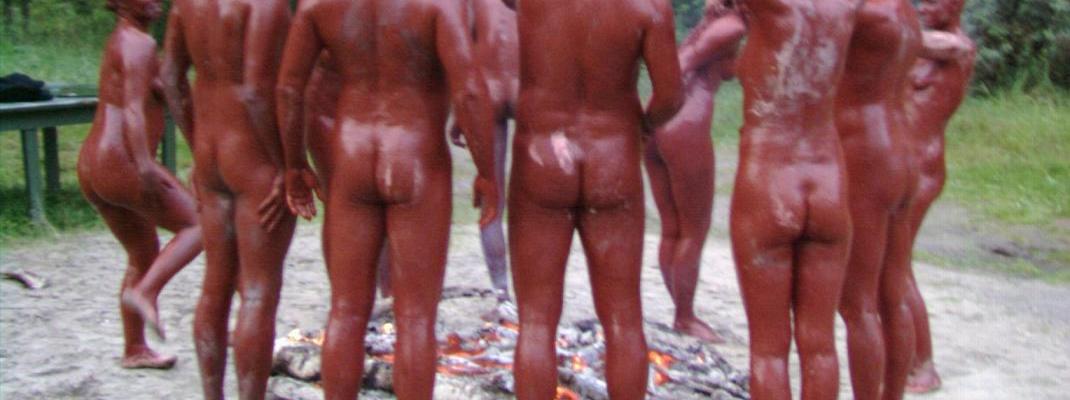
SuoMen-performance group, Punamultapläjäys, Juuka, 1998. Natural pigment used traditionally to paint houses applied on skin.

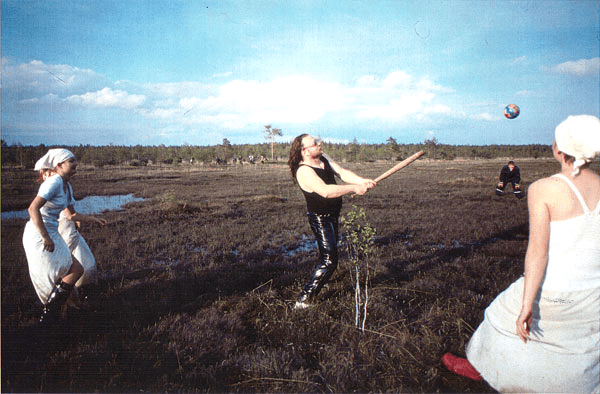
Suon estetiikka on edelleen ajankohtainen, se mitä ajattelemme suosta. Suo, joka kasvaa alle millimetrin vuodessa, on hidaskasvuisuudessaan kiinnostava ekosysteemi. Ajattelemme, että meillä on tätä runsautta niin paljon, että sen voi käyttää pois kuljeksimasta ja tavallaan hallita tätä kauheutta, joka luonto on totaalisesti. Vaikeakulkuisuudessaan ja upottavuudessaan sinne ei tee mieli mennä rämpimään, muuten kuin työn puolesta. Se vaikuttaa kaupunkilaiselle jättömaalta, jonka voi käyttää nykyihmisen mielen mukaan. Mikä on maapalan merkitys ihmiselle on myöskin ongelmallinen ajatus, jossa ajatellaan, että kaikella on oltava meille hyötyarvo, kaikki on meitä varten, koska osaamme ja voimme valjastaa olemassa olevia asioita omaan tarpeeseen, joka on loputon. Samaa logiikkaa käytetään monessa asiassa, jossa ajatellaan, että on olemassa joku, jolla on lähes loputon valta ja ne jotka kritisoivat kitisevät turhasta, koska eivät ymmärrä hyvän päälle eli hidastavat ja hankaloittavat putkiajattelijan elämäntehtävää ja -tarkoitusta.
Kun suo valjastetaan tuottavaksi, muutamassa vuodessa se on tasainen pelto, jossa ei kasva mitään todella pitkään aikaan. Mikä on soiden merkitys Suomelle nyt, kun voimme ajatella muita energian luontikeinoja? Mikä on sellaisen merkitys, joka on vaan jossain kaukana, mutta niin lähellä? On ajateltava, mikä on suojellun ja puhtaan luonnon merkitys meille tänään? Mikä on lähitulevaisuudessa kovinta valuuttaa? Tähän kysymykseen kun vastaa oikein, voittaa jättipotin. Se on varsin korvaamaton ja kasvaa itsekseen. Ihminen tarvitsee sitä kipeästi, kuten on tullut kovin selväksi. Miten voimme elää sen kanssa, tapahtuu kesyttämällä ja litistämällä, ajamalla yli. Tämä ei ole kovin harmoninen tapa.
Ilman luontoa me emme ole mitään ja meitä ei ole. Tämä asia kannattaa painaa hyvin syvälle kalloihin, koska kaikesta kieltämisestä ja vähättelystä huolimatta, olemme jo tulleet huomaamaan, että ilmastonmuutos, luonnon saastuminen, puhtaan veden saanti ovat elintärkeitä ihmisen ymmärtää ja osata ottaa huomioon. Ymmärtää näiden pieniltä ja vaatimattomilta vaikuttavien asioiden painavuus. Kun näihin osasiin tulee korjaamaton vika, olemme kusessa. Ne kettutytöt ja -pojat, puidenhalaajat ja huuhaatieteilijät, jotka ovat puhuneet luonnon ja eläinten puolesta, ovat varsin kipeällä tavalla olleet oikeassa. Mahtaa sattua riistokapitalistiin, fasistiin ja antifeministiin. Vähättelyllä ja suoraviivaisella ajattelulla tekee hallaa myös itselleen.
Kun ajattelemme lyhyellä aikajanalla tuloshakuisesti, kuten on ollut tapana ja on edelleen, on huomionarvoista muistaa, että niin ajattelee suurin osa ihmiskunnasta. Miten muutamme tätä koneelta vaikuttavaa tapaa tehdä ja ajatella, jossa oma etu on määräävä? Tarvitaan esimerkkejä jotka selvästi osoittavat, että toisin tekemällä voi pärjätä ja että on olemassa toisenlaista rikkautta kuin taloudellinen. Talous on se mittatikku, jolla kaikki mitataan, raha. Painotamme taloutta ja taloudellista kasvua juuri luonnon ja ihmisten kustannuksella. Luonnosta riistämme arvon, mikä siitä irti lähtee ja se tapahtuu tehokkaasti lyhyessä ajassa, jonka jälkeen siirrymme toiseen kohteeseen. Ajattelu on niin yksinkertaistettua, että on kummallista, ettei toiston haitallisuus aukene siellä missä sen pitäisi. Samaa taloudellisen hyödyn kautta ajattelua tehdään kaikkialla missä hyödynnetään eläimiä ja luontoa. Ne ovat täysin ihmisen otettavissa vailla muuta arvoa kuin se, mikä niillä on ihmiselle. Miten arvo ihmiselle mitataan, miten jonkun arvo havaitaan ja saadaan käyttöön? Mitä ihmisen on hyödynnettävä ja mikä on hyvä jättää hyödyntämättä?
Ihminen arvostaa eniten välitöntä hyvää oloa, joka on koukuttavaa. Pyrimme elämään hyvässä olossa, karttaen huonoa oloa. Olemme paljon mielitekojemme ja kuvitelmien vietävissä. Voittajia ovat ne, jotka kykenevät käyttämään systeemiä parhaiten omaksi hyödykseen. Tätä kiiltoa silmissä pidetään älynä ja oikeutena. Sillä perustellaan turkistarhaus, tehomaatalous, yritystuet ja tehokarjantuotanto. Onko otettava kaikki, mikä on otettavissa, vai voiko jotakin jättää ottamatta? Kaikki tehdään niin tehostetusti kuin on mahdollista puristaa kuivaksi. Puristaminen on hyvä sana tässä kohtaa, tiristäminen. Niin paljon kuin ihmisen voimilla irti lähtee ja sitä kutsutaan edistykseksi. Meidän olisi ajateltava hyödyn ajatus uudelleen. Mikä on tarpeellista ja kaikkia hyödyttävää perustavanlaatuisesti, ei antamalla välitöntä mielihyvää niinkuin sokeri, vaan pitkäkestoisesti pitää kylläisenä. Oikeutus kaikelle on edelleen raha ja oma etu. Edistystä olisi huomata tekojen vaikutukset pitemmällä aikavälillä ja ymmärtää tulla vähemmällä toimeen. Se olisi todellista edistystä.
”Kaikki nämä kaunokaiset henkäilevät jalkojemme juuressa viimeistä syksyään. Pientä kaistaletta lukuunottamatta koko Kaitasuo muutetaan rahaksi.
Niin että oikein kylmiä terveisiä (etenkin kihokilta) Riitalle, Mikalle, Vesa-Pekalle,Tainalle, Jannelle, Ollille ja Tuirelle, näille Korkeimman hallinto-oikeuden veijareille, jotka 18. elokuuta varmaan toisen kampaviinerin jälkeen päättivät myöntää Viipurin Turve ja Multatehdas Oy:lle luvan turpeenottoon.
Kaitasuon lähes 10 000 vuoden taival päättyy kaivinkoneiden möyhennyksessä mustaksi maaksi, jossa ei kasva mitään pitkään, pitkään aikaan.
Kyseessä ei ole mikään vähäinen mylläys Urjalan ja Humppilan rajamailla – turpeenottolupa on myönnetty 80 hehtaarille.” https://www.aamulehti.fi/hyvaelama/kavimme-katsomassa-milta-9-000-vuotta-elamaa-tuonut-suo-nayttaa-oikeus-myonsi-turpeenottoluvan-ja-kaitasuo-tuhotaan-200365873
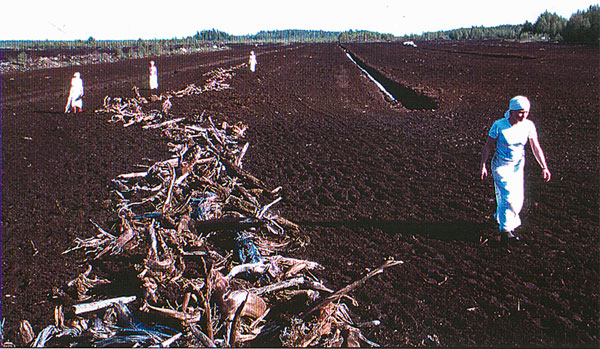
Napanuora, Konkeloiden raahaaminen kasasta takaisin suolle, 1998, Suon estetiikka, SuoMen-ryhmä

It is a strange feeling a movie being an organism that becomes part of you when you watch it and it remains with you afterwards. You are familiar with it but there is an element of unexplainable and the issue is of something that is not emptied. It is not just series of breathtaking images put on screen to take the viewer to another place. There are movies to entertain and bring instant pleasure, this is something else which is extremely difficult to point out without sounding an ecstatic fool stating the obvious, the brilliance and beauty there is, divine and timeless, but still rooted in time and place, to us. It is not extraordinary to hear male voice of critics, those who watch and love movies and so often disregard the feminine side there is clear and strong but somehow invisible for the male. To me it is loud as is the dogs barking in the fog and the sound of heels in a church where woman of the film is slowly walking like moving in a mystery and learning to know it. It also is not unusual to hear male directors say they did not realise how powerful the female protagonist really is for the female viewers. What is this woman doing she who walks like a queen into something ancient like a tourist, in to the old refusing to kneel down and pray and refusing to want the same which she should be wanting naturally. A surprise for her is how she is not able to perform the same rituals as those to whom it comes naturally, how out of touch she is. In the face of what kind of movies get made nowadays it is ironical to state harsh critique for Nostalghia. In many cases of movie critique subjectivity is speaking. Art is sensitive to the word of experts who give their final say and I have found the official standings on films often biased and unfair. Being judgmental towards something so delicate and precious is almost blasphemy as it is easy not to look. Is there same disinterest as there is disinterest and underestimation towards the feminine altogether I wonder. The public believes the experts. Experts know best. They have authority. To have faith in experts is one kind of religion we should learn to be more critical about. Pay attention the woman is driving and stops because she chooses to have a walk.
My attempt is to be as analytical as possible. What it is I am watching. As much as there is room for objective analysis in art and for Tarkovsky, there is emotion and devotion to his art and much of art analysis and critique have personal liking and opinions weighing in on the whole of what is being said about a piece of art and the artist. Nostalghia (1983) and Sacrifice (1986) are often said of being less good and artistically not as high in artistic quality, innovation and expression as Stalker (1979), Mirror (1975) and Andrej Rublev (1966) which all bring in front intensity of faith and religion in Russian culture and thinking, which was at Tarkovsky’s time an atheist country. Russia being an intensely macho country where worshipping the Mother of God hasn’t faded. The nurturing mother has important task and nurture especially which is part of the sacred. Highlighting the female for Tarkovsky functions as Ellen Ripley in the Alien movies. Her power is under serious doubt and seen as fragile, but she has it anyway and she uses her power to save the world.
Nostalghia struck me as it highlights the feminine, how faith is part of our bodies and what we see, how we look, the divine is in the feminine and there is the unbreakable link to nature, women’s desire to be mothers and have faith to the unknown, or not. To my mind the film is an exemplary exploration to how much one is master of one’s destiny and how the modern brings in and strengthens the conflict between nature and man, conflict between the sexes is a constant battle. For women to have a mind of their own is the modern and natural, they do their thing, the question is what is the thing of women, with women, what is theirs to have, for them. With the modern something happens to the collective, ideals and to the common good towards which to be nostalgic about is fair. Something happens to the individual in this process, the estrangement, loss and loneliness, an inner and outer conflict, a disaster. Question is what do we become? To be an organic part of nature bearing children, being a child and finding harmony there in simple things may be too simple there where there now is very little space for the harmonious and simple things. Choosing to be a traditional mother, a figure part of the sacred or a modern independent woman who has a say over her body and what she does, whether she believes or not, is liberty woman is not willing to back away from.
How much my admiration does justice to his art or does it cloud my judgment is probably a footnote. What is there on film that one senses, sees, feels, smells, hears, thinks, imagines via Andrey Tarkovsky’s movies as they are so packed but delicate, light, fragile and alive. Maybe that is it the moving part, essential aspect in his films how alive they are, how much emotion there is without frivolous nonsense as people in his films are sick of nonsense, sick of grandiose and sentimentality. There is sincere interest in human existence and how we experience, why feel the way we do and be trapped by feelings, how these personal experiences can be shown and be understood by others as the same. That is the true strength there, will to understand and look what is so felt, what is subjective and universal, the universal emotional to be understood which today is one difficulty we face as we are like images not revealing multiple dimensions on screen. How and why we can try to understand the other and be compassionate. Interesting is what makes a movie scene and an image sincere is the flaw, mess, ruin of ours. So much so that we believe in it and identify with it, absorb the view as if it was something to breath.
Fragility in a scene where a man holding a short white candle protecting its flame begins a task that seems irrelevant and pointless but is far-reaching. He has stepped inside an empty pool and begins to walk with a candle from one side to the other. Bottom of the pool is rocky, he takes careful steps. He touches the edge of the pool with his hand like it was a game as he begins and walks to the other edge trying to keep the flame burning. He fails a couple of times as the candle goes out, his frustration shows, he is seemingly tired and exhausted but he must hold on because he is determined and must keep the candle burning as he walks to the other side of the pool. He finally manages at his task gently holding the candle as it was his child, protecting it with his hand and coat as if he grew old while completing his task and died after having placed the candle on the edge of the pool and left it burning. It is an emotional scene, exhaustively beautiful, slow, painful for the viewer, grounded, vividly depicting a state of mind, an any man’s effort which is so packed and painful viewer feels the torture of failing and trying again and relief of succeeding finally as if it was a physical sports exercise. Close-up to the hands and the candle, heavy breathing.
I experienced Nostalghia as something which very few have been able to achieve on film for me. A personal astounding voyage into details which speak via femininity and a child, there is no one like Tarkovsky and his vision and it makes me wonder why so. Is it the extreme conditions of banning and spying on citizens, a doctrine of political that has no place for mystery and belief to the invisible, something hovering in the air is an escape from Social Realism and banning God. Tarkovsky’s movies speak the spiritual, spirit rains down and over endlessly or burns violently which happening is viewed on film by actors and me outside, what is there to see is a miracle of nature, to get soaked in rain is a spiritual happening like being baptised again and again and denying the divine is the ultimate crime against people and the spirit. The power of his films and this particular film is something of rare kind but still very everyday and everywhere, suffering and beauty of suffering, what becomes of suffering, what is to suffer, how to overcome this conflict and what does it make of us. Nostalgia is what all feel when looking back, the subjective view and what we remember is only for us. To share that personal view can be impossible, the subjective experience in time. Viewing breathtaking images of landscapes and historical buildings longing for release from the modern machine and finding momentary joy has such heaviness and weight it is unbearable as is the beauty in Tarkovsky’s movies. All is beautiful because all comes from God, all is light as all is heavy. How can we show our respect towards what we have and what is?
You can watch the film without knowing what the story is. That it was made over 20 years ago is almost irrelevant, but telling. There is something to the point that the woman is an interpreter and the male protagonist is a writer doing research. We are drowning and burning in the very same way as tragically, suddenly and sadly, watching people go by, who are they the couple asks. To be in search of and inquisitive has a purpose. Things happening around must have a reason. Times are in contrast to the slowness and pace, massiveness and weight of nature feels like a landslide taking us by our feet and pulling us down with the freezing stream. We are still protesting as we were then and remain completely dissatisfied with the ways we are managed, screwed and administrated, expected to accomplish, make, go by the book and be going somewhere as the taxi is waiting, luggage is packed and we are moving ahead somewhere forward not back in time but into the future. Not staying put, refusing to rot but still rotting as the houses and ruins in the film do. Rain comes through the roof, puddles become ponds on the floor and man wades and paddles in clear water inside ruins where there are landscapes, rivers and hills, bottles collecting the rainwater and a dog looking at the camera. Sounds and images are of beauty that is constantly being made by nature, humans wetting their shoes and clothes as they do not have any choice but go in and get wet. In Nostalgia there is fog and rain throughout all of the movie, sudden blink of sunlight lasts only a few seconds and it rains again. People don’t complain about the weather but they are in pain and in inescapable situation brought by their bodies, nature and other people, unbearable. Some go crazy which seems to be the sanest and most obvious thing to do. Don’t go with the flow, follow your own nature, if it is yours, if you understand what it is, if you know how to look and what really is beautiful, what is beauty of yours.
To be surrounded by water, be in water, face the inescapable flooding, wetness of clothes and hair. Woman sitting on a bed drying out her hair with blow dryer at a comfortable hotel among other guests who wander around bumping into each other at the corridor just as you, but not as poor as you, not as lost as you, not as wet as you, not as tired, not as out of their minds. There is no union, no true meeting, no coming together, people go their separate ways asking what is happening, not knowing is one cause of suffering. To dry out and never get dry is what tires people out to the limit of setting oneself on fire standing on a statue. Warmth comes from a bottle. Hotel guests are free to take refreshing and rejuvenating baths while a crazy homeless man goes around the pool in wet shoes. He is a poet, listen to what the poet says. Water is safety and saviour. It is about birth, divinity, life on earth, a cold shiver, death, drowning, drinking, listen to it. This is not a desert as it is not dry, maybe dry of joy. Life lies in the water with divinity which becomes at birth in opening the dress of the sacred mother from which birds fly out after a prayer is spoken to become a mother, please bless me. Candles are still the warmest of all to be protected at the altar melting bringing in light lighting up the place and prayers of women who wish to become mothers and those who are graciously blessed are with those who await. We are in water also at birth, our reflection is in the water, our becoming happens because of water.
To embody beauty and the divine, the sacred and the spiritual is what Tarkovsky’s movie Nostalghia does. It is the main theme for him which enlarges itself as his movies are few and monumental pieces of art finding out spirituality and the killing of it. Significance to a movie fan is as massive as historical paintings and buildings have, what are we without knowledge of history. Hair on a woman is the same as vegetation moving along with the stream of water in which there is a fallen statue of an angel. It makes one think every breath taken and held, hold breath and breath out, think about breathing, how the water feels on one’s skin and how that statue does not feel a thing, it does not know where it is. Russia is always there even though the movie happens in Italy. Italy seems the same as Russia, people are the same, beauty, meaning and purpose of religion, ruins, history, sentiments, sentimentality, there is something so similar that it is all one. Fight is the same, poverty is the same, suffering and relationships, problems do not differ. What is the desert here and why? The crazy man in the movie shuts off himself with his family in their home for seven years in isolation. They were rescued as if they had wrecked a boat at sea and been saved in the last minute, a mega spectacle of saving a family. With such small size Tarkovsky paints a profound image where Beethoven is only too pompous and royal, imperial and full of himself, played when something important happens and must be paraded. Beethoven and the equestrian statue on which to climb and set oneself on fire alone with a canister of gasoline while other protesters watch, the burning man falls to the ground. He was the crazy man and now he is dead. Statue remains.
”Andrei meets and befriends a strange man named Domenico (Erland Josephson), who is famous in the village for trying to cross through the waters of a mineral pool with a lit candle. He claims that when finally achieving it, he will save the world. They both share a feeling of alienation from their surroundings. Andrei later learns that Domenico used to live in a lunatic asylum until the post-fascistic state closed them and now lives in the street. He also learns that Domenico had a family and was obsessed in keeping them inside his house in order to save them from the end of the world, until they were freed by the local police after seven years. Before leaving, Domenico gives Andrei his candle and asks him if he will cross the waters for him with the flame.” https://en.wikipedia.org/wiki/Nostalghia
Mitä eliitti tarkoittaa? Se on valintakysymys, kuka mielestäsi on eliittiä, koska nykyään voimme valita. Se on yhteiskunnallisen arvojärjestyksen ja ominaisuuden ääneen lausuminen ja totena pitäminen, eliittiys on laadullinen termi. Se on hierarkkisen arvon tietämistä, oman arvon ja jonkun toisen arvon, on kuitenkin kyse arvo-oletuksesta johon liittyy absoluuttisuus johon uskotaan, jonka mukaan käyttäydytään, arvo joka on nähty, havaittu ja todistettu jollakin tavalla, joillekin, asiantuntijoiden kautta ja jota pidetään totena, arvo jota voidaan pitää yleisesti pätevänä ja ylevänä, tavoiteltavana ja hyvänä on oltava jotenkin tietoon liittyvä, annettujen ja saavutettujen ominaisuuksien summa jolle sana eliitti on yleinen tunnustus, arvonimi, kehu ja titteli tälle hyvälle ja parhaalle jota halutaan, ylläpidetään, kehitetään, jos se ei ole pysyvä tila, ja johon asioita verrataan. Eliitti on kuitenkin pääasiassa yhteiskunnallinen asema ja ei kerro laadullisesti välttämättä yhtään mitään, toteaa vain pallin koon, kyse on vahvuudesta ja miten vahvuus näyttäytyy, mitä vahvuudella tehdään. Eliitti voi myös degeneroitua ja silti pysyä eliittinä, kunnes tulee toinen eliitti joka kyseenalaistaa entisen eliitin ja sen arvovallan ja merkityksen tulevaisuudessa. Eliittiyyteen liittyy ansa ja valinta, kokemus valinnasta, vallasta, vapauksista, liikkuvuudesta ja ajatus ehdottomuudesta, oikeassa olemisesta, jonkunlaisesta kiistattomuudesta.
Eliitillä on auktoriteettiasema, sananvalta ja kyky käyttää asemaansa etenkin omaksi hyväksi. Minulle ei ole eliittiä, joten sana tarkoittaa minulle mielistelytilannetta, jossa kenties eliitti kutsuu eliitiksi jotakin kehuakseen, arvostaa eliittiä joka on olemassa eron luomiseksi ja itseään varten, vallan jaon ja erityisyyden, tärkeyden osoittamiseksi. Sanaa käytetään kun halutaan arvottaa joku ryhmä hyväksi, poikkeavasti korkeatasoiseksi ja edistyneeksi, yhteiskuntaa ja toisia ihmisiä sisällöllään rikastuttaen tai näin ainakin toivon eli siinä on harvinaislaatuisuuden ja lahjakkuuden leima. Se on myös tapa alleviivata, alistaa, tehdä arvottomaksi tai arvokkaaksi joku ihminen ja ryhmä sen johdosta mitä he edustavat, ajattelevat ja tekevät. Riippuu mistä ihminen on lähtöisin mitä hän ajattelee eliitistä, kuka on eliittiä, mitä eliitillä tarkoitetaan ja mikä eliittileiman merkitys on. Elitismi on poissulkeva ja negatiivinen. Mitä elitismi sulkee pois on kysymisen arvoinen asia ja miten eliitti kokee itseään koskevan kritiikin, ottaako se sen henkilökohtaisesti vai rakentavasti. Tämä myös määrittelee eliittiä, mitä siitä voidaan sanoa ja mitä eliitti ajattelee itsestään. Elitismiä puolustavat perustavat kantansa elitismin säilövään ja kasvattavaan tapaan pitää arvossa ja tuoda esiin kauneus, älyllisyys, edistyksellisyys, tieto hyvästä ja huonosta, elitismiin liittyy ajatus moraalin, paremmuuden ja sivistyksen vaalimisesta.
Ihmisellä voi olla itsellään kokemus, että on eliittiä sukupuolensa, lahjakkuutensa, ihon värinsä, ulkonäkönsä, syntyperänsä, asuinpaikkansa, omaisuutensa, yhteiskunnallisen asemansa ja koulutuksensa vuoksi. Kyseessä on laadullinen arviointi joka yleensä saa osakseen hyväksyntää kun ihminen itse uskoo täysin oman erinomaisuuteensa. Ajatuksemme hyvästä, siitä mikä on saavutus, menestys ja arvostettavaa pysyvät jokseenkin samoina varsin kauan aikaa, joita arvoja ei kyseenalaisteta tai niitä on vaikea kyseenalaistaa ilman negatiivista vastakaikua. Kyseessä on kohteliaisuus ja tapa, elitismi on omaisuus jota ei hyvällä jaeta tai anneta pois. On olemassa eliitti ja se muu osa kansasta. Eliitti on kuin seinä joka on vaikea murskata ja siksi se on lähes aina vanhoillinen. Mitä tämä eliitti tekee joka on niin hyvää ja johon tällä muulla osalla ei ole helposti mahdollisuuksia, saada aikaan sama tai jotakin parempaa on siis uskonasia, todisteet on voitava kriittisesti tarkastella. Kehittyä samaksi kuin se toinen joka on eliittiä on elitismiä eikä välttämättä kehitystä, omistaa samaa, olla samaa, puhua samalla tavalla on tulla hyväksytyksi, hakea hyväksyntää. Puhumme eliitistä kuin se olisi jotakin tavoittelemisen arvoista ja ehdotonta hyvää. Eliitti sanaan liittyy materiaalinen hyvinvointi ja ylemmyys, ylenkatse edelleen eli sana on arrogantti ja kenties nykyään jo merkityksetön korusana. Tarkoitus on erotella hyvä huonosta etuliitteellä eliitti-, jotta tiedämme mikä on se mihin osaamme pyrkiä ja tähdätä. Medianäkyvyys voi johtaa eliittiyteen, se on poseeraamista ja esiintymistä pahimmillaan, johtamista, asioiden purkamista ja uudelleen kokoamista parhaimmillaan. Kuinka hyvin eliitti kykenee näkemään itsensä ja pystyy itsereflektioon ja tätä kautta henkiseen kasvuun kertoo myös eliittiyden tasosta.
Eliitti sanaan liittyy älyllisyys, puhetapa, käytös, koulutus, tulotaso, pukeutuminen, tason tietäminen, kalleus, mikä on se taso jossa ollaan eliittiä ja pysytään siellä. Se on voittamista, suuruutta ja ymmärtämistä erinomaisuudesta ja sen laadusta. Eliittiys on vahva tietoisuus erinomaisuudesta verrattuna muihin, verrannollinen palkkaan, saavutettuihin etuihin ja verkostoihin. Liittyykö siihen osaaminen ja tuntemus todellisuudesta vai kuvitelma näistä? Puheen tasolla voidaan luoda kuvitelma osaamisesta ja tietämisestä. Jos eliittiys onkin harha ja kuvitelma omasta erinomaisuudesta, että oma asia, se mitä tarjoaa, on parempaa kuin moni muu ja puhuu niinkuin tämä paremmuus olisi totta eli puhuu mainospuhetta vailla totuuspohjaa, eliittiys saa jännittävän tyhjyyden löyhähdyksen.
Suuri kaupunki antaa hyvin luultavasti tällaisen kokemuksen, on olemassa itsestäänselvyys ja kiistämätön fakta. Kun sinne menee aistii mitä kaupunki ajattelee itsestään, miten kaupunki ja kaupunkilaiset ovat, mitä kaupungista puhutaan, miten kaupunkilaiset itse näkevät kaupunkinsa, mikä on kaupungin itsetunto ja henkinen pääoma. Siihen täytyy jotenkin varautua, koska kaupungeittain asenteet vaihtelevat suuresti. Eliittiys joka tulee koulutuksen ja taustan kautta on opittu ja haluttu asia. On haastava ja koominen tilanne kohdata tyhjyyden leyhähdys ja nähdä uskon vahvuus johonkin hauraaseen jota pidetään vahvana ja vankkumattomana. He jotka ovat omasta mielestään eliittiä, mahdollisesti seisovat suossa. Mikään ei horjuta tätä eliittiyden uskoa ja loukkaantuminen tapahtuu välittömästi. Horjuminen ja todellisuuden näkeminen tapahtuvat ainoastaan katastrofin kautta, että menettää sen, jonka kautta on ajatellut olevansa eliittiä, kermojen kermaa. Hämmentävää on kuinka ulkoinen asia saa aikaan eliittiyden, että on vaikka New Yorkista. Siinä on heti sellainen eliittiaura, mutta mikä sen tekee? Onko se amerikkalainen ekseptionalismi? Se että taide on eliitin, taide on eliitille tapa erottautua, on kokonaisuuden kannalta erittäin huono asia, enkä itse työssäni koe minkäänlaisia eliittituntemuksia, muutoin kun jos tapaan ihmisiä jotka saavat elantonsa taiteesta tai kuten yleensä tapaan ihmisiä joilla ei ole mitään todellista tietoa taiteesta vaan ajatellaan että taide on jotakin korkeaa, koska niin ajatellaan ja se on vaikeaa. Raha, eristäytyminen, asenteet ja perinne tekevät taiteesta elitistisen.
Elitismi liittyy rahaan ja rahan määrään, mutta ei hyvätuloinen popstara ole elitistinen, koska hän tekee kevyttä musiikkia. Elitismi liittyy siis sisällön tasoon ja valintaan, erikoisuuteen, harvinaislaatuisuuteen, arvokkuuteen, perintöön, moninaisuuteenkin voisi kuvitella. Jos on elitismi joka on jo kuihtumassa, se on menettämässä arvonsa, painonsa, merkittävyytensä ja sisältönsä senhetkisessä maailmassa, ja tätä saatetaan pitää tekohengityksen avulla ja konemaisesti hengissä, koska eliittiasialla on tehtävä ja niitä jotka uskovat asian merkityksellisyyteen ja painoon kokonaisuuden kannalta.
Ajattelu että eliitti on paras mahdollinen ihmisryhmä on kammottava, koska siitä puuttuu nöyryys. Nöyryys ei tarkoita nöyristelyä ja nuolentaa, vaan aitoa kiinnostusta erilaisuutta ja uusia mahdollisuuksia kohtaan. Kun eliitti on se johon itseään tulee verrata ja tuntea nahoissaaan elitismi, on se vastoin sitä mikä on hyvää. Eliittiä vastaan kyllä hyökätään etenkin kun koetaan halveksuntaa ja väkivaltaa eliitin puolelta, mutta onko sillä mitään merkitystä nykyään voi kysyä. Jostakin syystä moni on omasta mielestään parempi kuin tuo toinen ja haluaa sen mahdollisimman suoraan osoittaa, mikä on varsin suuri perusongelma ihmisten kesken. Elitismi on vallankäyttöä ja varsin brutaalia. Se on tavallaan helppo ja suoraviivainen tapa, mutta kompleksinen ja itseään syövä, koska ajatus itsestä ylempänä on tehty lähes mahdottomaksi muuttaa. Suomen kauneus on minulle ollut ettei kotitausta vaikuta suoraan siihen, miten ihminen elämässään pärjää. Ajatus, että eliitin joukosta tulevat eliittilapset on edelleen voimissaan, he ovat niitä jotka tietävät olevansa eliittiä verrattuna muihin. Tämä tieto ja luottamus omaan erinomaisuuteen on ensiarvoisen tärkeää menestyksen kannalta. Ajatus eliitistä on varsin normaali ja vanha ja sellainen halutaan pitää elossa koska tarvitsemme vertailu- ja juhlimisen kohteita. Onko eliittiyden kokemuksella ja varjolla kyykytettävä muita, on peruskysymys yhteiskunnallisesti ja mitä kyykyttäminen tarkoittaa ja miten siihen voi vastata, onko olemassa puolustuskeinoja on tasa-arvon kannalta oleellista. Se mihin ihminen syntyy, hänen sukupuolensa, ihon ja hiusten värinsä ja vaatteensa eivät kerro ihmisen lahjakkuuksista ja miten hän voi pärjätä, miten hänen elämässä tulisi pärjätä ja mitä tehdä. Itseluottamuksen syntyminen vaatii uskoa omiin mahdollisuuksiinsa ja luottamusta rakenteiden sallivuuteen ja vastaanottavaisuuteen. Se mitä eliittiys tarkoittaa on hyvä muistuttaa, että se ei ole pysyvä tila, josta ei voi pudota tai saavuttamaton torni jota on palvottava.


1. Pounding a Mall
2. How architecture creates thinking as a structure for society. Ideology and model behind mass consumption
3. Architect as a fascist or is it him to blame?
4. I call them space invaders.
An article trying to define and understand, look at to the core of the mental landscape we now possess and own as familiar and acceptable. Modelling the body of profit architecture, what kind of purposes and meanings lie behind creating our consuming based social structures, architecture we inhabit and dwell in, which has overwhelmingly conquered the planet and the style to construct is total and fast. Trying to understand power there is in use and how this type of architecture is used to control us, our behaviour and thinking. Also my concern is what kind of public spaces within the frame of consuming are offered for us. How we are in and outside, how these spaces exist and what they do, what is the function there and the lasting effect. Issue of time is essential as buildings stay put a period of time, are made in factory style and manufactured in similar fashion all over.
1.Pounding a Mall
I was told that behind us was a supermarket being built. This was in Pori where there are old factory buildings of which some are restored others aren’t. That we were inside what is left of a cotton factory, which dates back a hundred years or so. I was also told that in this little town called Pori, there are three shopping centers within one kilometer radius (not to mention supermarkets). So thinking to myself and continuing, how is it possible to imagine infinite growth and consumption, that there are people who can afford and are willing to spend their money and time at malls and thinking building malls is progress as is continuous consumption. How is it possible for one to have customers for all of them all the time? Other puzzling issue is how is it possible to get a permission to tear apart old historical factories for this kind of use. Since it has been done, the demolishing of our heritage in Finland, since the 60’s and seventies at least, it has been part of bringing down our visible history to make profit and call it progress.
As a small country, as people, wouldn’t it be crucially important to preserve our cultural memory which is visible, a sight and kept in use? Yes, I could see it a vital issue for many reasons. To see the construction site and feel the pounding of concrete pillars getting hit in to the ground felt physical and alien. Such heavy-duty raises questions. Walls of our classroom were trembling. One hammering pound per second. I looked up at the clock on the wall, it was like a heartbeat. Sweet metaphor for grey concrete stumps to hold it all together, engineered. Isn’t it heartbeat that synchronizes, resonates, comes to bring us enjoyment in music, like music of building up a house. A simple monotonic beat made robotic as we are in a hurry and made look effortless in a way in its massiveness. But when you listen to your own heart, the squeaking and bumping makes you feel nausea. This pounding irritated everybody and the thought of a new market was a sickening idea. Wondering this happening everywhere we got a new perspective, when Yik Chum someone from Hong Kong told us that, she had worked in an office and listened to the same kind of sound every day for three years, a nonstop pounding. Also that in Hong Kong this kind of sound is constant. She lived upstairs to a mall and it is very common in HK to build such high buildings, which contain every possible service one can possibly need in order to live there. Well, we were stunned. How small Finland seemed and how small it is. It looked like Hong Kong lives in different time that is science fiction here in Pori Finland. To adopt this kind of progress probably is inevitable, one cannot live hating it can one? Well one can question the inevitability of it. One thing being what does questioning on one’s own do and being irritated by this progress. We are the ones they are for, these malls, right? Question mark is that I’m not sure. Users, the customers, passerby, owners of the premises, owners of the land, what is it to use a building?
To build is a practical practice, daily sight in a city. Cities are being reconstructed, modelled for our purposes in a democratic or undemocratic way to sustain and restructure our lives. At least in Finland attempt is to be as democratic as possible and process is public. Though it puzzled me to hear an architect say that the system is too democratic, making the decision-making avoid any experimental or bold solutions and in the end everybody mostly follows the same safe patterns fearing something different would not make the wanted profit. In Finland it is clear to see this since the old has been gladly removed and cubical architecture has invaded our land. It is difficult to find which democratic ways are in use when it comes to constructing when it all looks the same. I have my doubts. One approach to view this dilemma is to see who is building and what are the main reasons to construct. Quick look tells me behind my back a supermarket is getting started and another one and another one. Is there a demand for it? Who investigates the demand, who designs these shopping places? It must be calculated and the system manipulated. Calculated so that it emerges as ultimately what people need. Profit architecture which has a purpose and which does good for all.
Profit architecture is to get value out of us during and after having built the site, it is us who are abused, but do we feel abused? We are supposed to like it as it is convenient, easy and part of way of life. Reasons for such houses to exist, to exploit, to have ground to stand on. It could be called fascism wrapped in a package with a smile and sold to us or forced on us and we go where things are cheapest. Just as fascism it lures a crowd with cheapness and slogans with looks, something we think we can afford and must have. So in this line of thought, it is not for us, it is for those who profit. Not just talking about the supermarket behind me, but of the genre of malls, supermarkets and shopping centres are brainwash. There is plenty of reason for harsh critique, but does it sink in there where critique is aimed at? For some it’s a kind of progress that cannot be stopped and should not be stopped. People like malls, they go there to spend time and have fun. That we like and live in capitalism emphasis is on enjoyment and be able not care for the consequences is part of the enjoyment. To live we have to consume products, we need products as we do not have time or energy or capabilities to make all by ourselves, malls and shopping centres easily provide us cheaply what we need and beyond in a pounding-like way.
How malls are brought to us is one way to tell there is nothing ordinary citizens can do, somehow. Companies building their empires are enormous forces. What comes to capacity in funds, employees, connections, planning, they are getting their voice heard in ads and via lobbying via ideology of consuming is the only way modern people must live etc. The whole idea of a mall is to be an ad and a container. Malls, as I see them, are shaped for storage, to have simple routine-like maneuvers practiced, for people to move with trolleys, for the shopkeeper to bring in huge amounts of goods, to cash out, rip off as many people as is possible in rows like in a factory. Interesting article on the issue on www.thefunambulist.net # Weaponized architecture///Architecture for profits Optimization: The Supermarkets’ layout (2012). Which remarks ‘the evil’ from above gazing, an architect laughing at us when we think we are free, but are carefully put in use, used like puppets and under control as our behaviour and thinking is studied, how we need and how we want to be seen. Thought of an evil individual behind architecture may be a bit coloured but there is clearly a group of people who profit a huge deal and there is cynicism and pure exploitation that should not go without critique. How architects/constructors/politicians can and make an impact on the culture of building and consuming is an interesting one. Do architects have to be heroic master minds who stick out via competitions until they can make a difference and are listened to? Do architects have opinions about profit architecture or do they just fulfil needs of constructors who pay architects to not make architecture but constructions for money? Template buildings need obviously very little creativity as it is repetitious, new or old architectural ideas get simplified as concrete elements and other building materials are factory goods and time is money.
2.How architecture creates thinking. Ideology and model behind mass consumption.
To enjoy a shopping center there is entertainment, cinemas, cafés, restaurants, floors, elevators, stairways, carousels, fountains, trees, glass ceilings, lighting, ads, lots of ads and lights. Interior design posing pretty or what happens to be in style, kind of cheap but glittering, mostly depending on what is sold in the particular place and for whom. We can spend time there looking, sitting, walking, buying, dreaming, seeing people, spending money and time. The main issue bothering me has been how this architecture influences us, our behavior, mental state and health, thinking, imagining and understanding what is good and valuable. How such places engage us, harass, puzzle, disturb, change our attitudes that we are not harassed by being harassed or the way we see the world and ourselves. Or on contrary malls make us feel good about ourselves giving inspiration, peace of mind, maybe healing and protection. I’m asking because pounding up structures like malls next to each other is a very impressive and aggressive act, even humiliating. Secondly to lure thousands of people to consume is another gigantic happening, which like chain reaction has started movement like no other which is monotonic and similar. I examine the phenomenon as a pedestrian, biker, careful consumer, artist and a Finn. Also, because I’m concerned as it is a global phenomenon, a consuming and living disaster.
An interesting case began when in the 1950s scientist Jonas Salk was working on polio in the basement of a Pittsburgh laboratory. Work was not proceeding. He left to Italy to rest in a monastery. After the breakthrough, which led to the vaccine for polio he felt that the monastery had deeply effected him as a place and as a building. He invited architect Louis Kahn to design The Salk institute in La Jolla in California hoping other scientists would benefit the serene surroundings. Since then in Salk there has been research on how our surroundings affect feelings and behaviour. “In the current issue of Scientific American Mind, Emily Anthes describes how ceiling height, colors and other design factors influence attention and creativity. Scientists are just beginning to address these questions, in part by studying changes in brain activity as subjects make their way through virtual reality rooms.” “Mose Bar, a neuroscientist, speculates that our brains are hard-wired to avoid sharp angles because we read them as dangerous.” https://www.fastcompany.com/1278814/your-brain-architecture
What does research give to building new if it is not taken into consideration in no other way than how to make the most of us as consumers and psychological beings? What comes to being efficient at the place of consuming, work, living is to be a machine and in use for profit purposes, being useful. How workers enjoy working in a place has a lot of value for employers and of course for workers themselves. Same goes with were you live and spend time at. What we see and how we react to structures around us is interesting. Does monotonous dull city architecture depress us or make us violent, for example.
The thing I wonder is do we create new points of views at all or do we build the obvious taken for granted state for the monetary value is the primary value and an interest for small group of people who have too much power? Do we live in science fiction already where efficiency and amount is what has number one value? To go back to something that we are losing is impossible, something is lost entirely in terms of architecture. Possibly all that which we value as beautiful and worth having around and go see abroad, the history which has brought value cannot be made again.
3.Architect as fascist or is it him to blame?
In Finland we have small-scale and a short history of profit architecture in comparison to for instance the United States. In the US there are already generations who go and see malls of their childhood which may be abandoned and empty with parking lots, to remember what it was like then, how it was maybe better. Would you be nostalgic for a mall? For example website www.deadmalls.com is filled with pictures of abandoned malls. Companies owning these not-in-use buildings don’t want this kind of publicity, but the site still exists and it is quite interesting and has a fun side to it. Documentaries like Malls R us from year 2008 by a Canadian Helene Klodawsky https://www.youtube.com/watch?v=EAIDAzTtoCA gives a good picture of impact of malls to people’s lives, picture of people who have spent a lot of their leisure time at malls and around them. The idea of a mall has become to statue something else as well. Has bad profit architecture and bad architecture eventually come up to equal the same as bad television? People love both, but feel guilty for using and liking them. As I see youngsters in Finland using mall parking spaces to meet friends, skateboard, bike, spray graffiti, have fun etc., I wonder is it so because they don’t have any or many other places to go to do these things. Conclusion to this is that options are given scarcely and one has to make the best out of places that are there. How to imagine something else can be a difficult task. To find and create alternatives is hard work. What makes malls problematic as public spaces is that they are privately owned, monitored and similar. What one owns one also controls. “By designing this space as an interior area accessible by definite entrances and supervised by dozens of video cameras and sensors, corporations were able to minimize the number of undesirables that were allowed in “their public space”. “The design is also oriented in order to compose a whole interior fantasy world that is supposed to be perceived as better than the outside reality. This world is safe, clean, warm, entertaining and attractive. It is a disappointment to leave it says a consumer who forgot/denied reality. The main characteristic of capitalist design is to leave nothing at chance. Indeed chance provokes uncertainty and uncertainty provides an illegibility that can be unproductive for Capitalism.” https://thefunambulist.net/architectural-projects/politics-capitalisms-architecture The mental landscape hyper-controlled public spaces create is oppressive, paranoid and delusional. Other mental emotional image given is the feeling that consumer is in charge, choosing and being cared for, nurtured and given the best chances, opportunities and goods available. The customer can feel enjoyment, pleasure of consuming and freedom. “The unreliable, possibly dangerous group of people is kept outside.” Capitalism’s Architecture tells that: the contemporary mall is said to have been invented by The Austrian-American Victor Gruen in the 1950’s. It is supposed that it was him who thought of the pure capitalist architecture as an element of urbanism. Firstly shopping malls were intended for the middle class as the equivalent of old European city centers, a pedestrian place of gathering and activity. Doing it differently the United States placed this new kind of public space within the framework of privatized supervision, security and control. www.thefunambulist.net # POLITICS///Capitalism’s Architecture. This is the insides of a mall in short, the gathering of crowds and almost inhaling the same ideas has some scary visions. How about the shells around, cubes as I call them, shapes built? Still controlled by cameras, even the trashes behind are watched, locked up.
4. I call them space invaders.
There is a field, wasteland or a meadow of some kind, bushes and it’s been there like that for a longer period of time surrounded by small-scale shops and supermarkets. Like in Tampere where I live, there is Lielahti which is one part of the town where many malls are situated and are all offering a bit different varieties of goods, but none of them is for spending time, dwelling. Such dwell in malls are in the center of town. Shopping centers are booming in Finland. Is it hysteria or just convenient acceptable progress? Interestingly the biggest malls are not the biggest sellers according to the statistics on shopping centers in Finland in Wikimedia about 20 biggest shopping centres, 2010. The website of the Finnish Council of Shopping Centers says that a successful shopping center is the pounding heart of a community and gives a definition: shopping center consists of a commercial building in which retail outlets and services open inwards onto a walkway or concourse. The gross loanable area is generally at least 5,000 sq. m. Shopping centers have at least 10 retail outlets. A mall has one or more anchor tenants and a number of key traders as well as other retailers and services. The services may be either commercial or public. A single trader may not exceed 50% of the total commercial space. Shopping centers have joint management and marketing. www.kauppakeskusyhdistys.fi. Though year 2012 yle.fi reported a decline in building shopping centers in Finland in the next few years. Finnish real estate company Citycon is a pro-active owner and long-term developer of its properties. It is a major owner and builder of Shopping centres in Finland, elsewhere in Scandinavia and in the Baltic. They say on their website they take on account of environmental aspects and the well-being of the areas surrounding its retail properties, which provides solid foundations for the company’s success and growth in the future. www.citycon.fi. In the light of having seen and visited many shopping centres anywhere in Finland and my skepticism I very much would like to see one of their properties to be what they claim. Very often those interested in constructing shopping centers are multinational companies to whom project investors can invest in. But there are good news too as Rautalampi municipality has taken chance and is looking for funders to build wooden 1000 square meter shopping center, which would focus on locally produced goods such as local food and organic food. http://www.investinfinland.fi/web/invest-in-finland/search-results?p_p_id=3&p_p_lifecycle=0&p_p_state=maximized&p_p_mode=view&p_p_col_id=column-1&p_p_col_pos=2&p_p_col_count=3&_3_groupId=162753&_3_struts_action=%2Fsearch%2Fsearch&_3_keywords=rautalampi+shopping+centre This is a soon hopefully to become a trend, because so far in Finland the repetition of the same models is a major fault and worry. Monotonous landscape of blank straight forms, blank colors, cubes with gigantic ads are rising up to the sky in favor of vast amount of traffic, visibility, exploitative industries for mass consumption. Made consuming look easy, unproblematic and light in weight and problems like abuse of employees’ rights seem far away. There are projects that have designed different kinds of malls, for example for a mall to create it’s own energy and experimenting new kinds of appearances. It is called climate protection supermarket and one is located in Graz Austria. Also designers have had emphasis on using sustainable materials and environmentally friendly economical construction to reduce the life-cycle cost of buildings. Critics assume such projects to be only local and exist only to polish the surface of the big players in the industry. One way or the other there definitely is a demand and hurry to develop new ways of consuming and constructing.http://www.archdaily.com/805071/shopping-nord-graz-behf-corporate-architects
http://www.archdaily.com/search/projects/categories/shopping-centers
written 2012


https://www.theguardian.com/world/2017/jan/27/barcelona-cracks-down-on-tourist-numbers-with-accommodation-law ”Last year the city’s 1.6 million residents were heavily outnumbered by an estimated 32 million visitors, about half of them day-trippers.”
We all agree travelling is exciting. Maybe moving around is expected of us. It is fun leaving our everyday lives behind and go on an adventure, an essential part of lives of modern people and what comes to taking photographs, it is to take the city with you, where we have been, how was it to go there is part of the experience. How we think about the problems we face during and how effortless a trip must be, stressless. We can share the experience by showing our shots and talk about the trip, own it, having been there is a possession and an add-on to our lives. How does travelling change us is an interesting question as it is said travelling broadens horizons of ours and our perspectives. It is also an experience to those locals who can experience the tourists, visitors, those who come and go. The thing is what do tourists do and give other than a money flow, what is the cultural heritage there as tourism is a cultural issue, it is culture and we do it because of culture, because of the culture of travelling. Question is what motivates us? We want to know more or we just want more in comparison to others? Do we go back to our normal lives with something extra special which makes our lives better or is it a sigh as a relief that going away and leaving is possible? Maybe having done something we cannot do at home. To take a trip when mood is to get loose we may do the forbidden, go over limits of behavioural rules which we do not cross at home. It is interesting what we think about our freedoms and rights as travellers, travelling lords or the prohibitions that there are when going and do we take them into consideration, what is the respected issue when travelling. It is the traveller. Going overboard freeing body and mind completely is something connected to travelling. We become more experienced and fluent in travelling, our lives more fuller via being able to move freely, be able to decide for ourselves where we can go, enjoy ourselves, look around and wander. Do you go to see the hotspots, the sights or do you see places that are more outside that normalcy? How do we do travelling and how much effort goes into taking a trip is what we want of a trip. Do we just go on a whim and how much is left at chance? How do we choose our destinations? The more important the city the more important we feel? Grandiose, history, story of the city, what the city adds on us as we go there. To feel more elevated, part of the city, part of energy a city has is to feel alive.
This means travelling is one of the most positively felt activities for modern people. It is an organic part and an expectation that everybody does it, takes part in this excess, luxury and freedom. It used to be something only rich people could afford and enjoy, enjoy exploration and become civilised. It is seen only as a positive thing by cities who want to lure more visitors. Mass tourism does not get much critique or when it does it is an insult against those who say the money-making industry is so important and lucrative there is nothing wrong with it. How can anybody be against such good money, how can anybody be against tourism, tourists and travelling which is a good part of modern lives, it broadens thinking and educates people. If this was the case we would have really broad minds and educated individual everywhere. Surely you know better already. Lessons here are cultural. What do we learn via travelling to strange countries? As cultural education seems to be more like glued on and the emphasis is on the experience, my question is what really changes people? To gather items such as photographs from our trips is to collect an altar to worship our egos. What is the lesson there one might ask. Sure we learn how to move. Do we learn how to see differently or do we repeat something, repeating a way to travel, how to see, how to think?


 Majakollektiivi Timanttimetsä